
Safe Ways to Clean Hard Surfaces Without Damaging Glass
Concrete cleaning near windows requires low-pressure washing, proper pre-rinsing, protective covering, and the right cleaners. Strong spray and harsh chemicals can stain, etch, or crack nearby glass. By adjusting your method and using simple barriers, you can clean concrete surfaces without putting windows at risk.
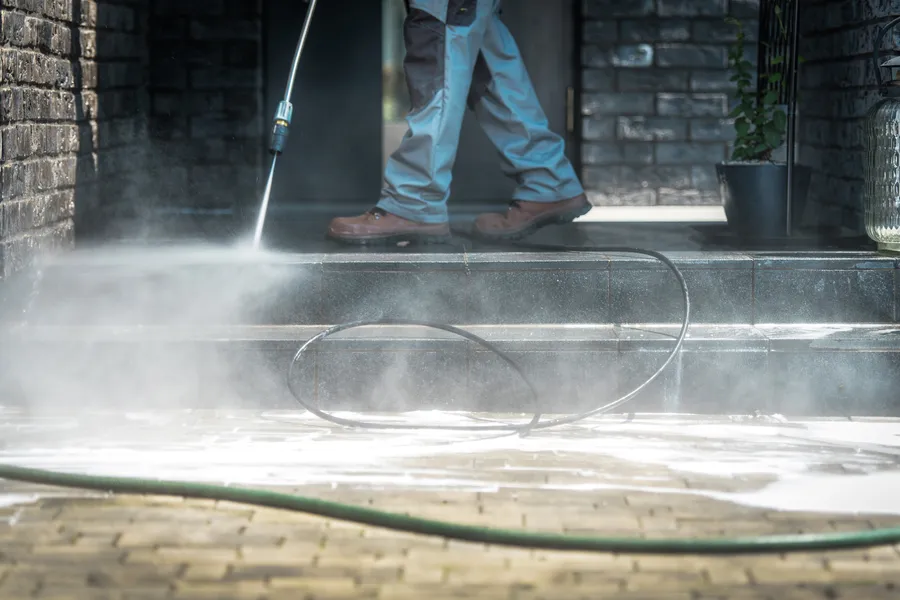
What You Need Before Starting
Before you begin any concrete cleaning project, gather the right tools. This helps you work safely and avoid accidental damage.
- Low-pressure washer or adjustable pressure washer
- Garden hose with spray nozzle
- Mild concrete cleaning solution
- Plastic sheeting or tarps
- Painter’s tape
- Soft-bristle brush
- Safety glasses and gloves
Using the correct cleaner matters. Acid-based products can stain or fog glass if overspray lands on windows. A mild detergent made for exterior surfaces is often a safer choice.
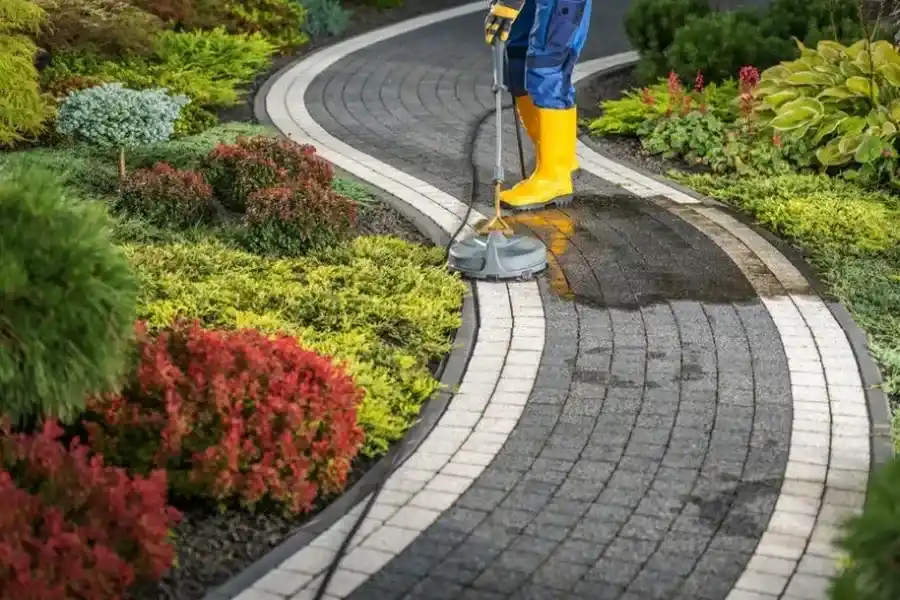
Step-by-Step Process That Protects Windows
Follow these steps to reduce risk while cleaning driveways, sidewalks, patios, or pool decks near glass.
- Rinse the windows first. Wet glass is less likely to absorb chemical residue.
- Cover nearby windows. Use plastic sheeting secured with painter’s tape around frames.
- Pre-soak the concrete. This loosens dirt and limits chemical absorption.
- Apply cleaner carefully. Use a pump sprayer instead of spraying directly toward windows.
- Use low pressure. Keep the wand angled away from glass at all times.
- Keep a safe distance. Stand several feet away from windows while spraying.
- Rinse thoroughly. Rinse concrete first, then remove coverings and rinse windows again.
Angle matters more than many people think. Spraying straight on can push debris toward the glass. A slight downward angle helps control runoff and keeps spray away from frames.
Common Mistakes to Avoid
Window damage during concrete cleaning often happens because of small oversights.
- Using maximum pressure near glass
- Skipping window protection
- Letting chemicals dry on glass surfaces
- Spraying upward toward window seals
- Standing too close while power washing
High pressure can crack older windows or break weakened seals. Even if the glass does not shatter, the seal between panes can fail. That leads to foggy windows later.
Another common issue is hard water spotting. Concrete runoff can contain minerals and dirt. If it dries on glass, it may leave behind marks that are tough to remove.
Best Practices for Long-Term Results
Safe concrete cleaning is not just about today. It also helps protect your property over time.
Work in sections instead of rushing the whole surface. This gives you better control of water flow. It also prevents runoff from pooling near window frames.
Choose the right day. Windy weather spreads overspray farther than expected. Calm conditions make it easier to manage where water and cleaner go.
Keep seals and caulking in good shape. If window seals are already cracked, even light spray can force water inside. Check frames before you start any exterior cleaning.
When to Call a Professional
Some jobs carry more risk than others. Large commercial buildings, multi-story homes, or properties with older windows require extra care.
If concrete stains are heavy oil, rust, or paint, stronger treatment may be needed. In those cases, improper chemical use can damage both concrete and glass.
Professionals use commercial-grade tools with adjustable settings. They also know how to shield nearby surfaces while still delivering deep cleaning results. This can save you from costly window repair or replacement.
Final Recommendation
If you want safe concrete cleaning in Santa Monica, CA, we can help protect your windows while restoring your surfaces. At Spotless Cleaning Systems Inc., we use controlled pressure, proper surface protection, and safe cleaning solutions on every job. Call us at (310) 388-4960 to schedule service or ask questions about your next exterior cleaning project.